History

The Limoges Factory

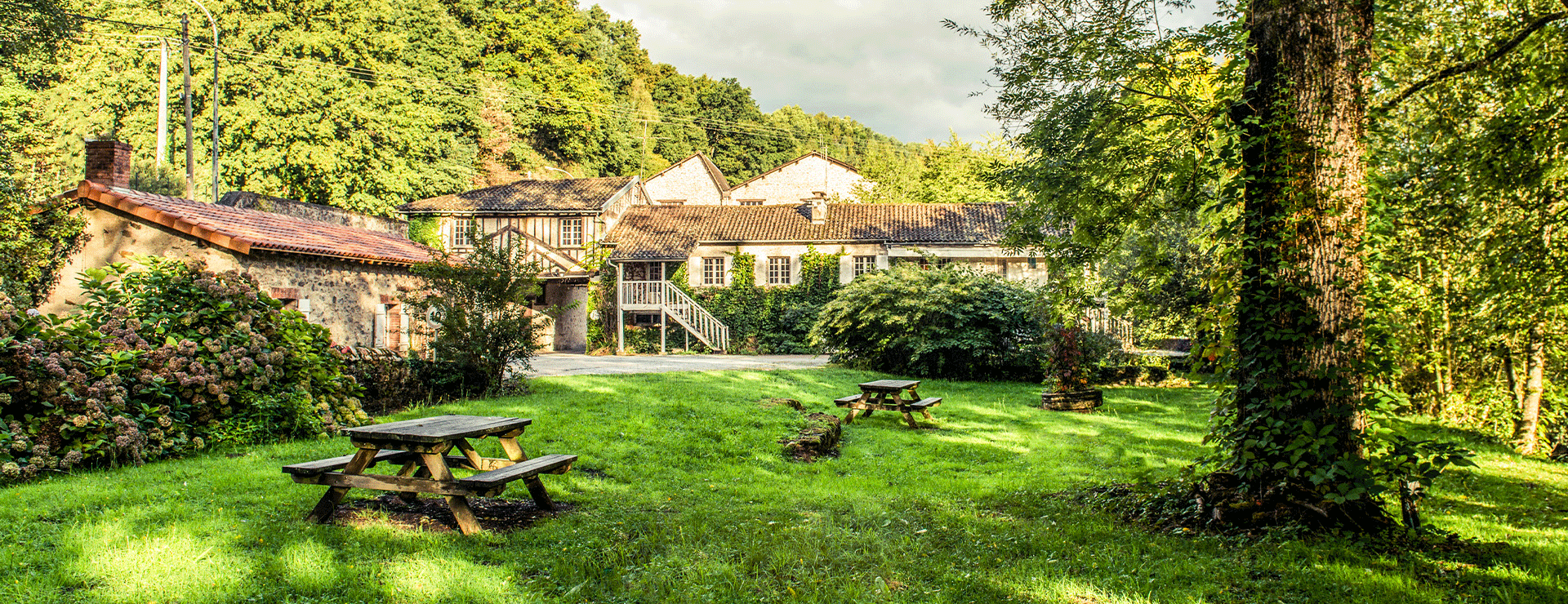
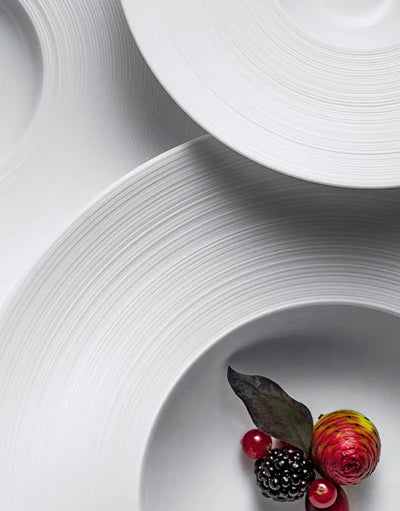
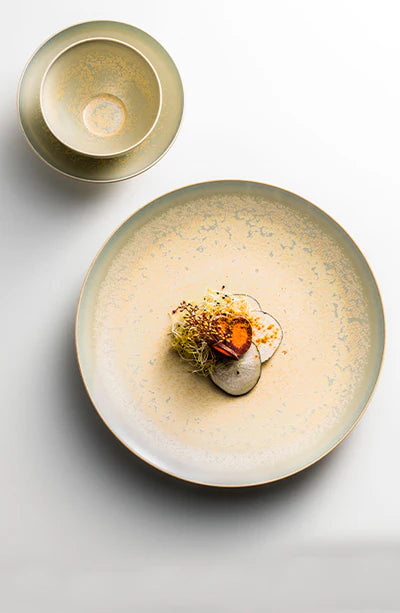
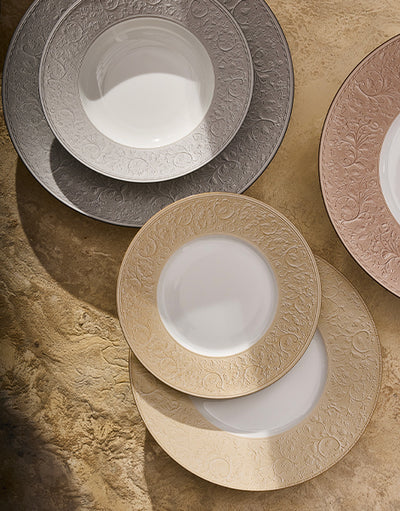
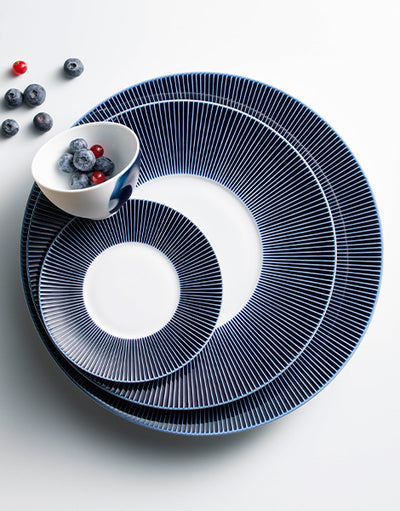
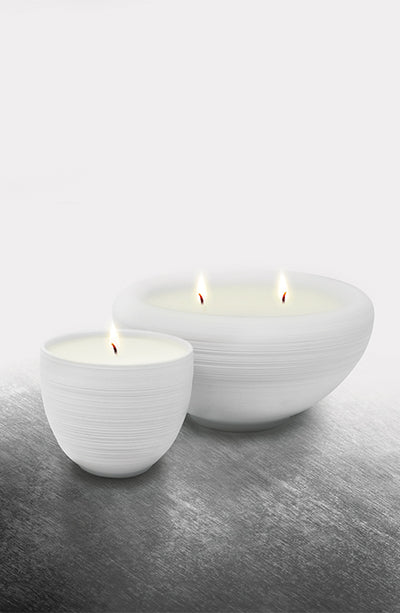
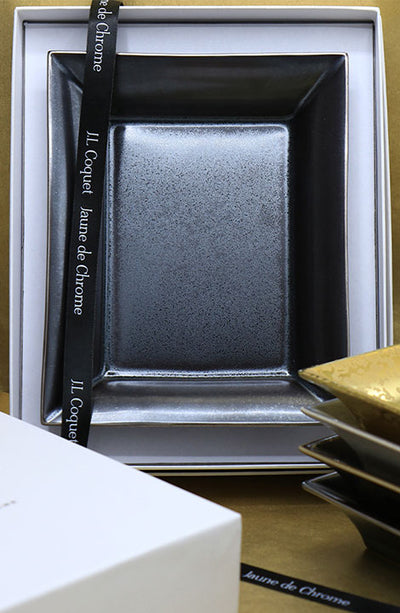
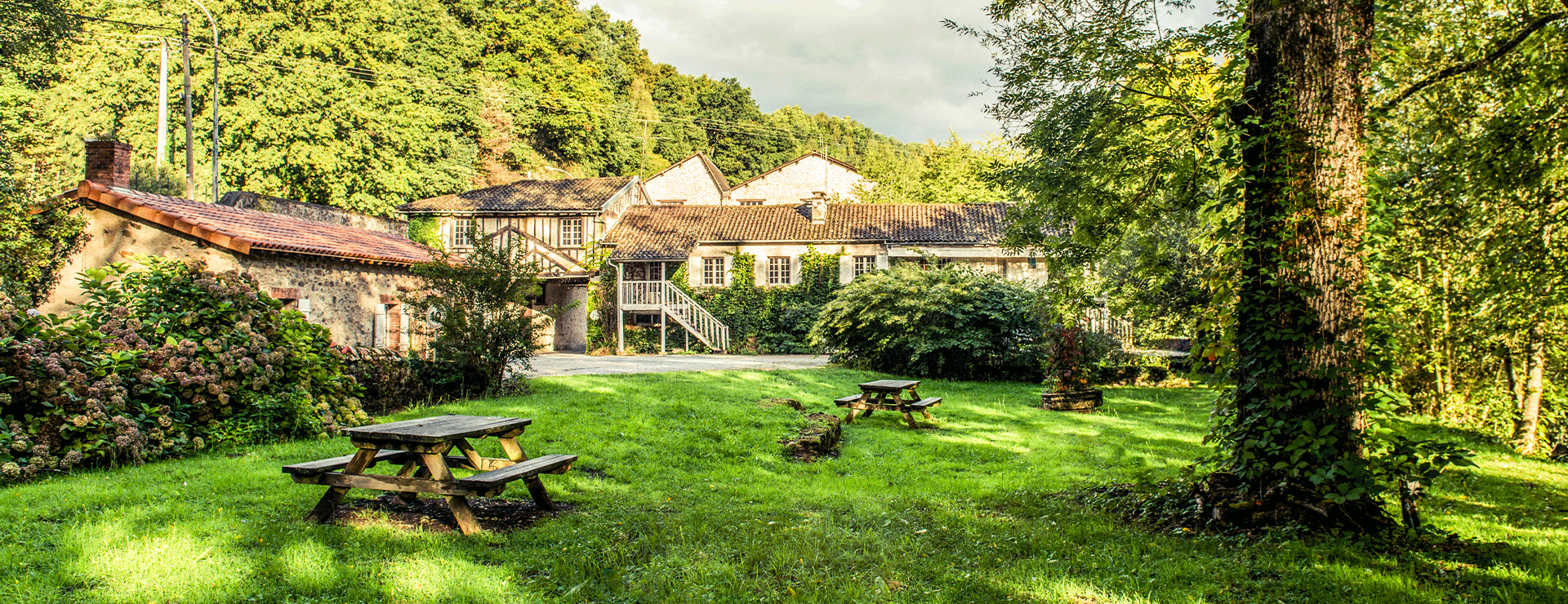
Founded in 1824, 25 kilometers from Limoges, JL Coquet is renowned for the purity and delicacy of its porcelain, as well as for the excellence of its traditional craftsmanship. The translucent whiteness of the material, the brilliance of the gold, the contrast of colors, and the finesse of the engravings are the hallmarks of its collections. Awarded the French Living Heritage Company and Protected Geographical Indication (PGI) labels, this exceptional Maison has become the symbol of the French art of living and of "Made in France" savoir-faire, whose elegance graces the finest Michelin-starred tables.
200 years of JL Coquet

JL Coquet

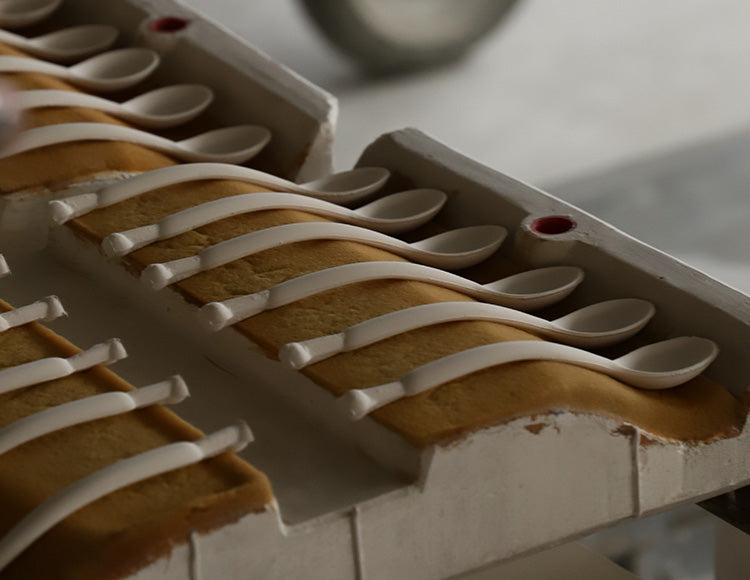
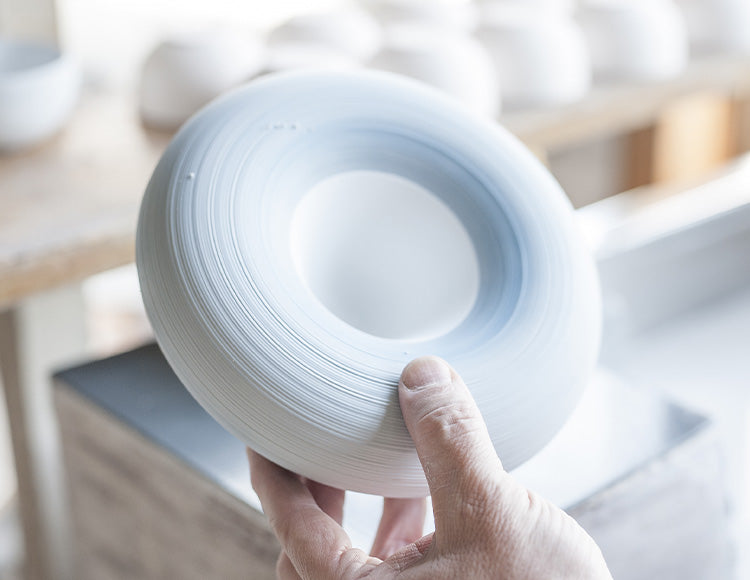
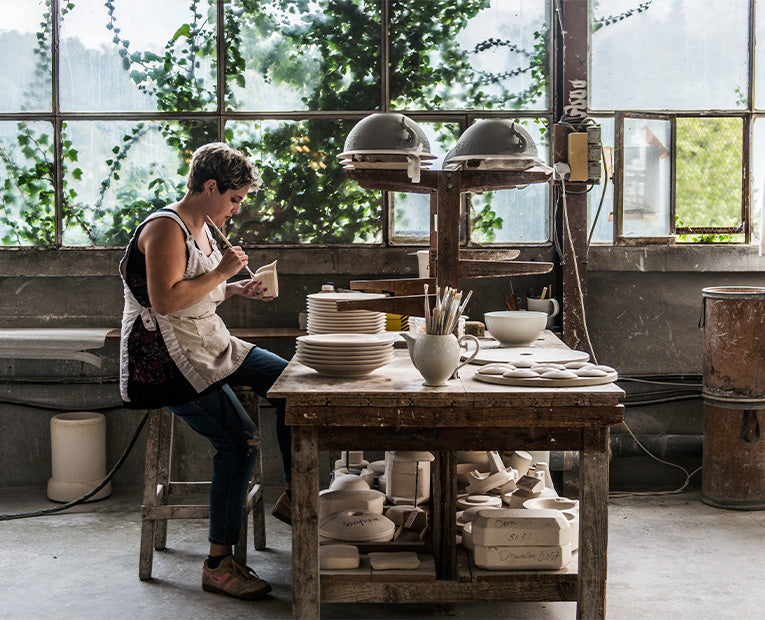
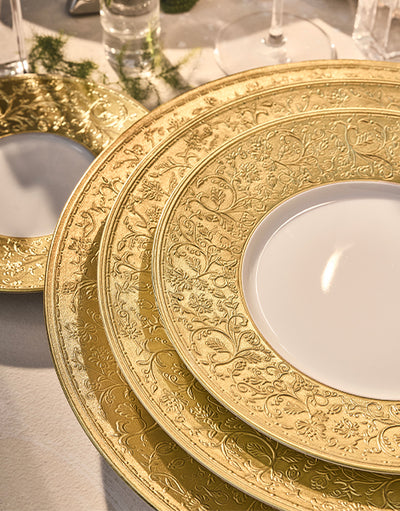
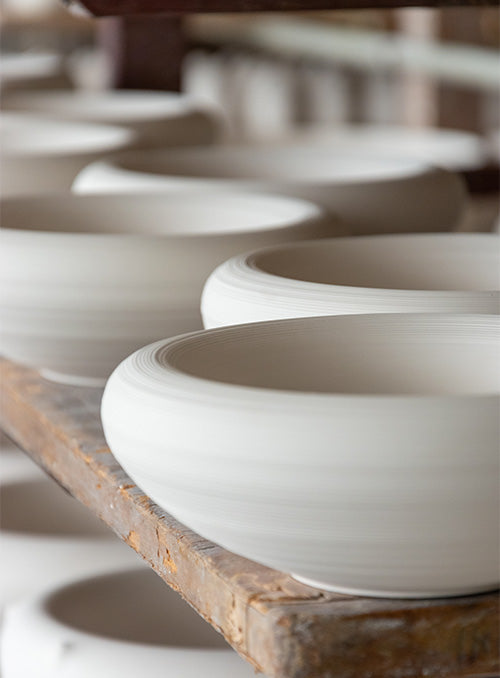
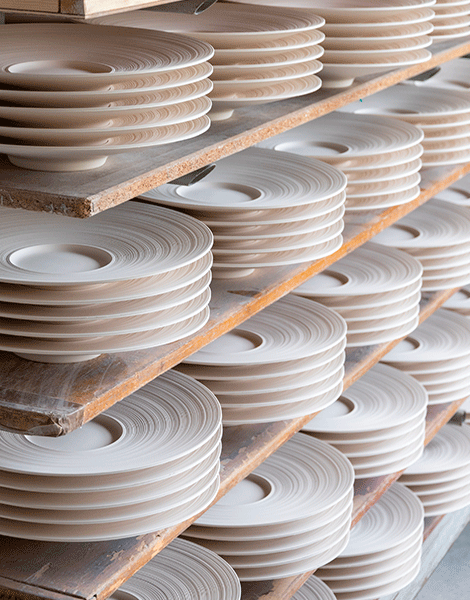
JL Coquet porcelain is the result of an alchemy between water, earth, and human expertise. Our porcelain is distinguished by its whiteness, a symbol of which it has been for many years. It is thus recognized as one of the whitest, most translucent, and most delicate porcelains in the world. Obtaining a part can require nearly twenty operations during which cutting-edge techniques and know-how are intimately linked. Thanks to a unique engraving technique, the inlays of gold, platinum, or other precious metals highlight the designs of our products while ensuring their irreversibility. This technique gives the colors and patterns a unique depth, enhancing each of our pieces.
The manufacturing

The sets

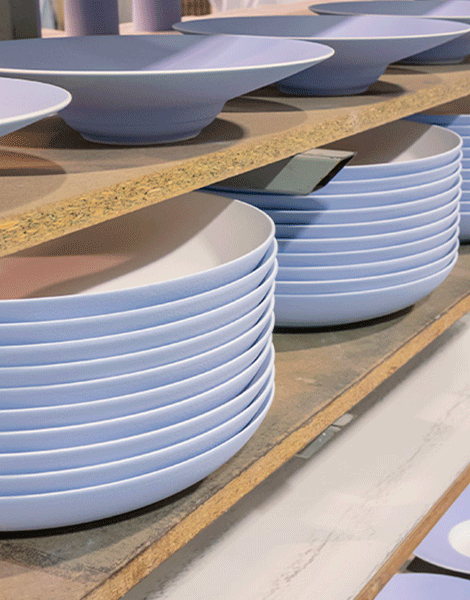
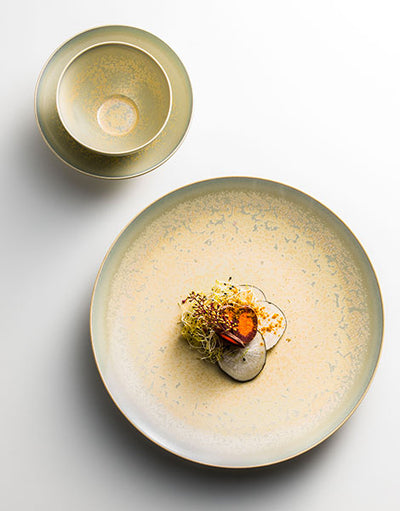
Simultaneously, thanks to a unique, hand-applied satin-finishing technique, a mineral glaze is applied to certain areas of the piece to protect the matte finish of the bisque, while the glaze is applied to the remaining areas. This combination of matte and glossy effects offers unique aesthetic contrasts while preserving the durability of our products, which are not prone to abrasiveness or marking. With this experience recognized by the greatest chefs, our porcelain represents the French art of living and contributes to the influence of "made in France" know-how throughout the world.
The manufacturing

Jaune de Chrome

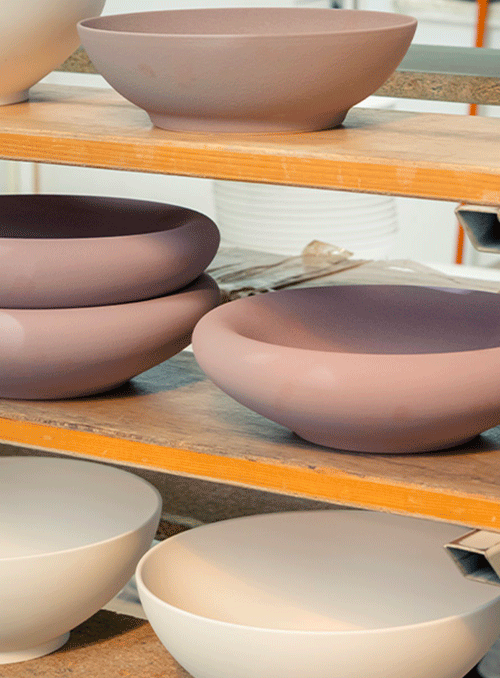
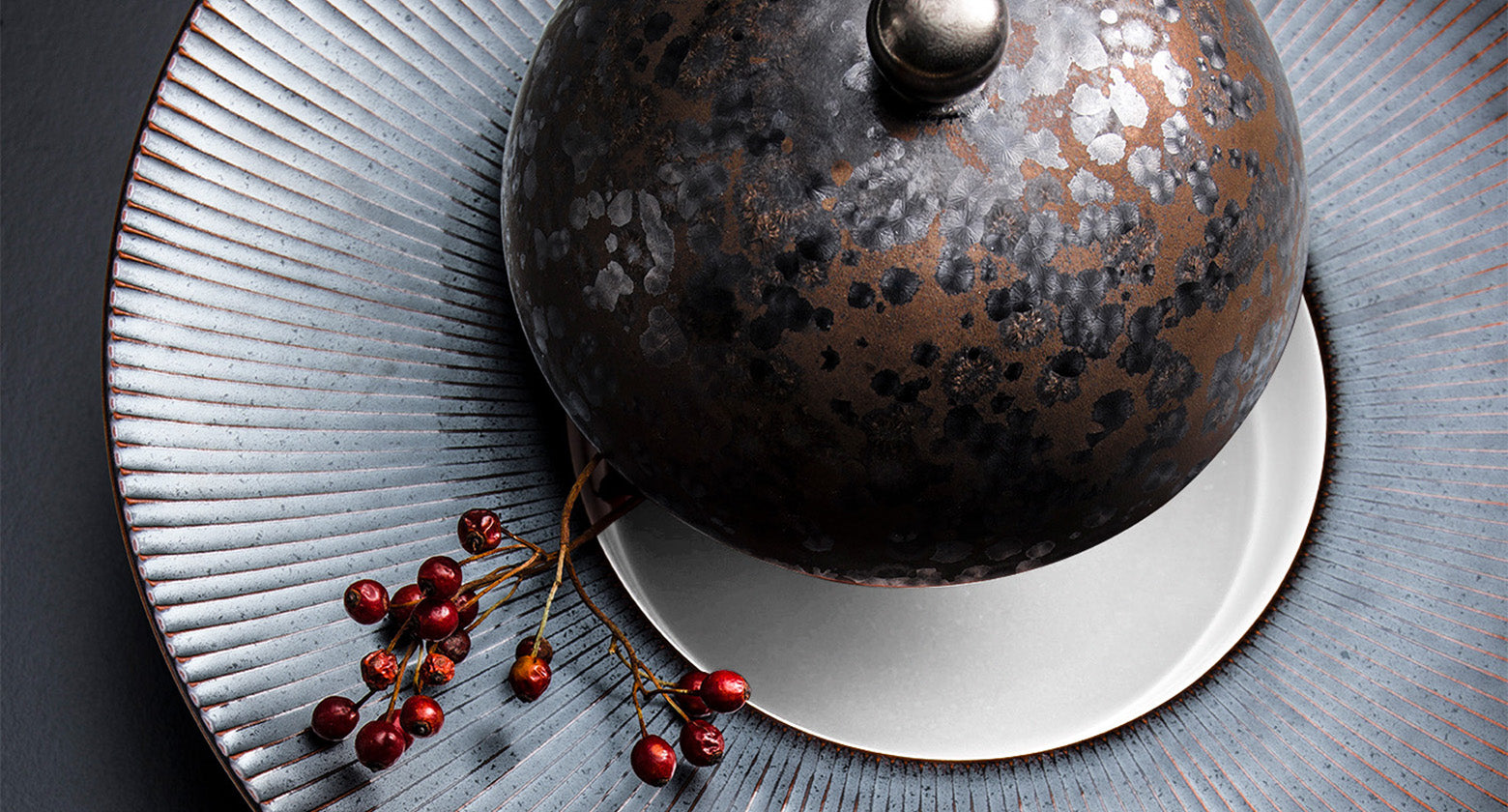
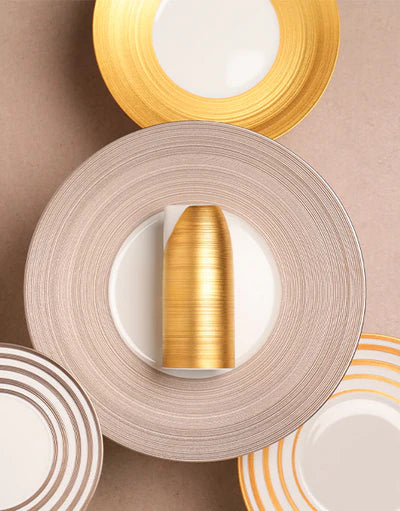
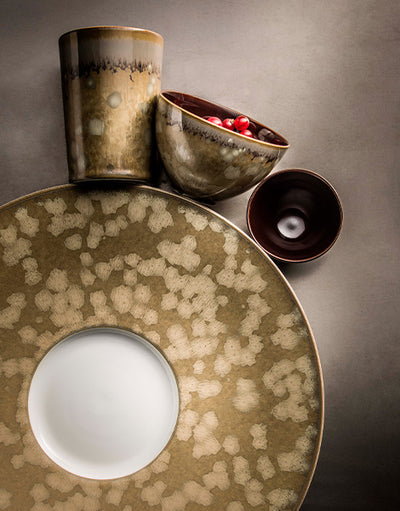
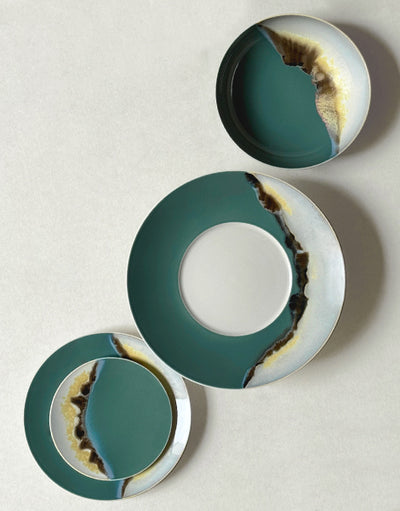
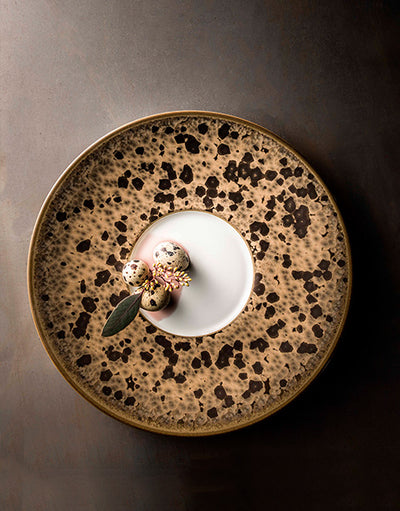
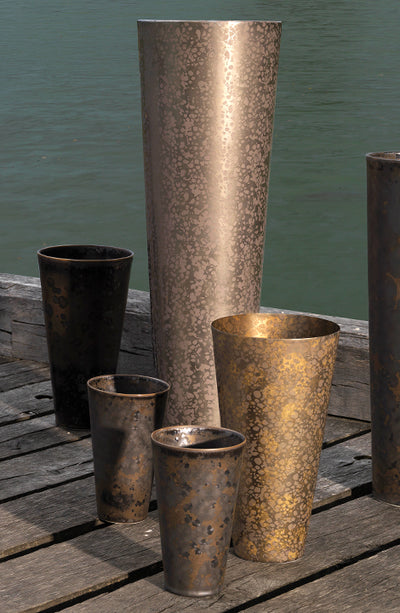
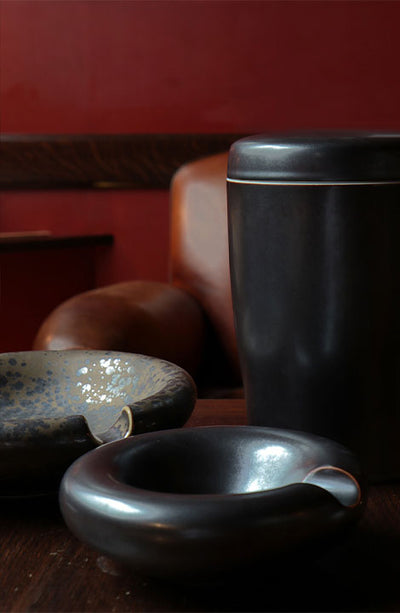
For more than twenty-five years, Jaune de Chrome has been developing products in its factory in Saint-Léonard de Noblat, located a few kilometers from Limoges (Haute Vienne – France) combining traditional porcelain work and contemporary finishing through remarkable enamel work, a rare characteristic of our company. This exclusive process makes our products absolutely remarkable. It consists of meticulously applying an alloy of enamels and metallic components to the porcelain for a truly surprising textural effect.

The sets

Enamels

This technique demands great skill and extensive training so that each of our artisans can achieve perfect mastery of the decorations. Even with impeccable technique, the process remains artisanal. Each piece thus possesses a unique dimension, as the decoration undergoes slight variations during firing. With this experience recognized by the greatest chefs, our porcelain represents the French art of living and contributes to the influence of "made in France" know-how throughout the world.

1
Porcelain paste

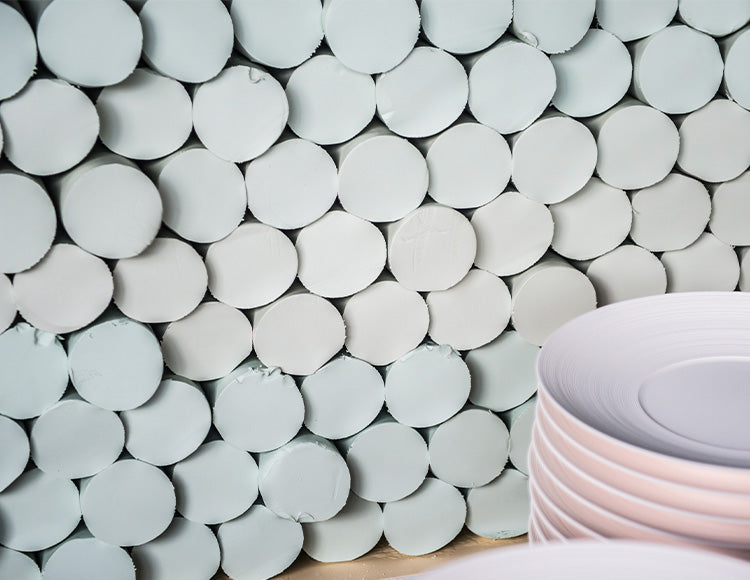
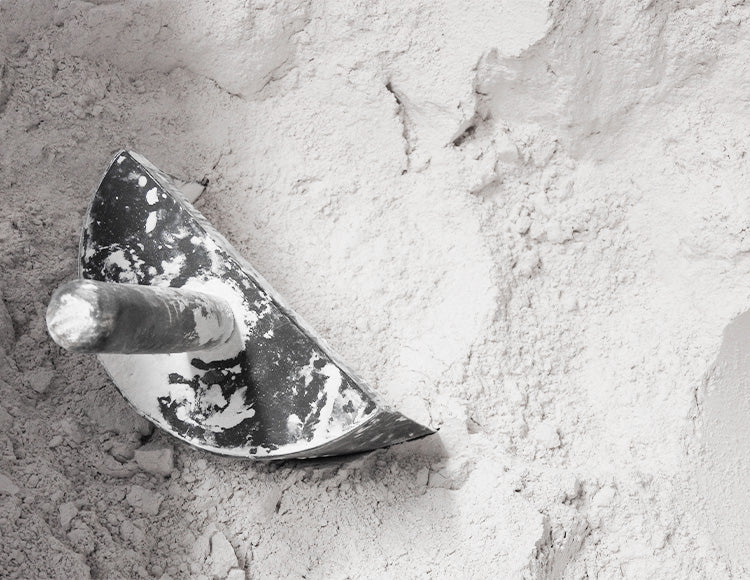
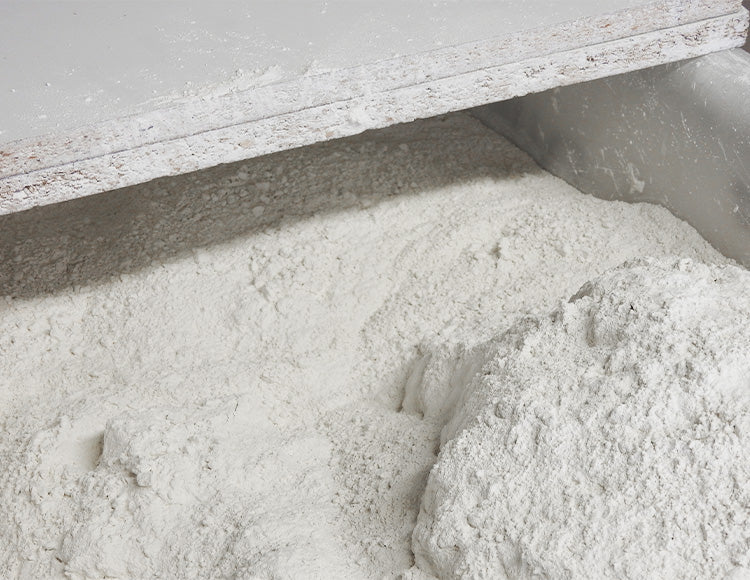
Porcelain paste is composed of 50% kaolin, 25% quartz and 25% feldspar. These materials are diluted in water, ground, mixed, sieved and then filtered, to form into cakes before being transformed, according to the manufacturing techniques, into a more or less liquid paste.

The paste comes in 3 forms,

- Liquid, called slip, it is used for casting.

- De-aerated and kneaded into semi-soft dough rolls, it is used for calibration.

- In powder form, obtained by atomization to obtain tiny granules, it is then compressed by isostatic pressing.

2
The modeling

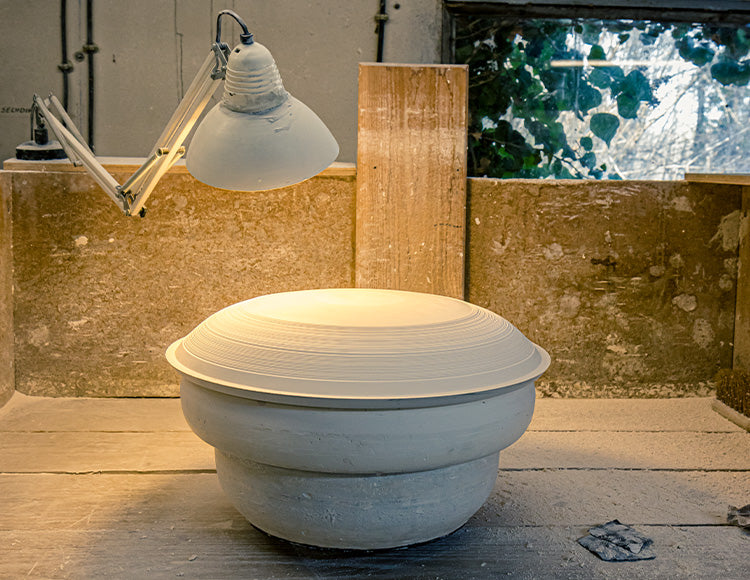
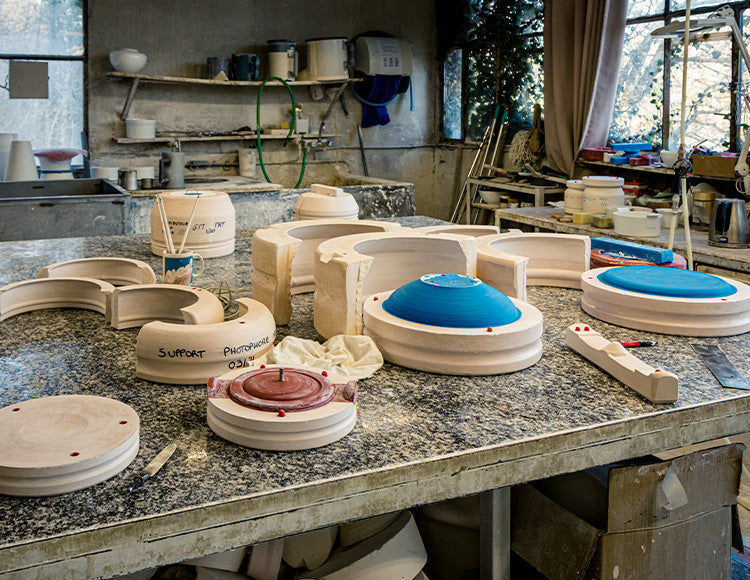
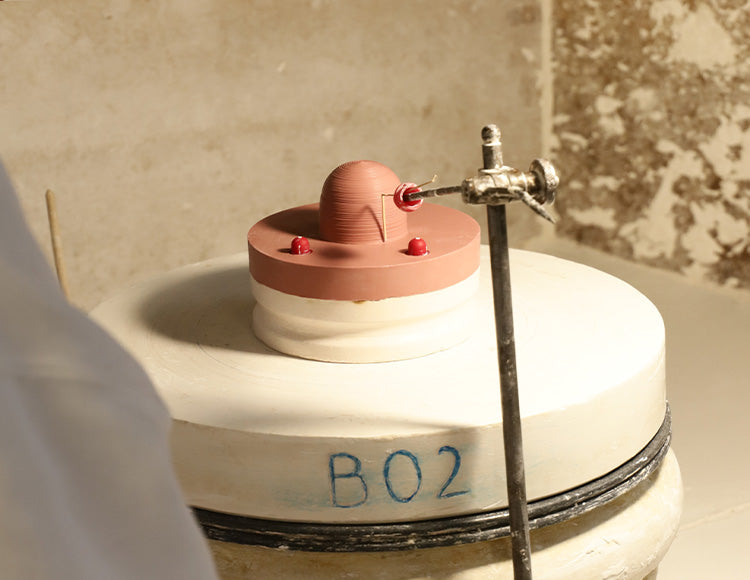
In our modeling workshop, modelers create a model from a drawing, which will be used to make the molds. This model is made of plaster at a scale 14% larger than the actual size. This allows us to anticipate the shrinkage of the piece during firing. This model will be used to create the master mold, which will then be used to make the production molds.

Watch the video
3
The pouring

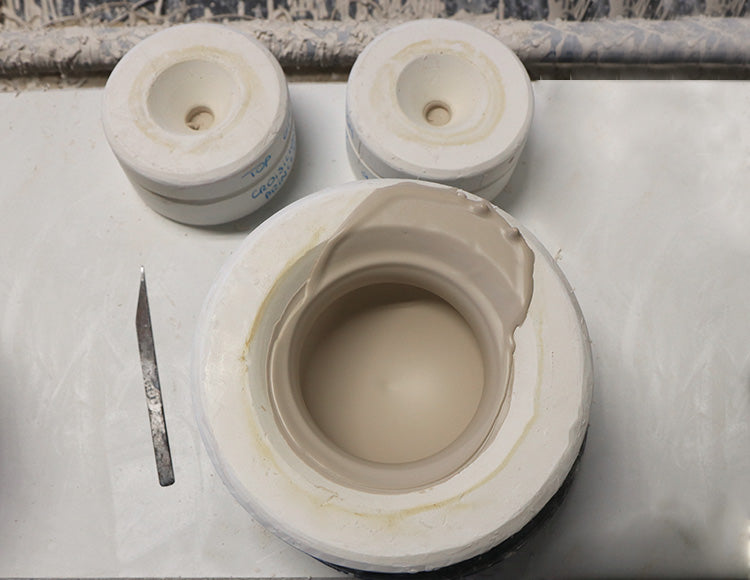
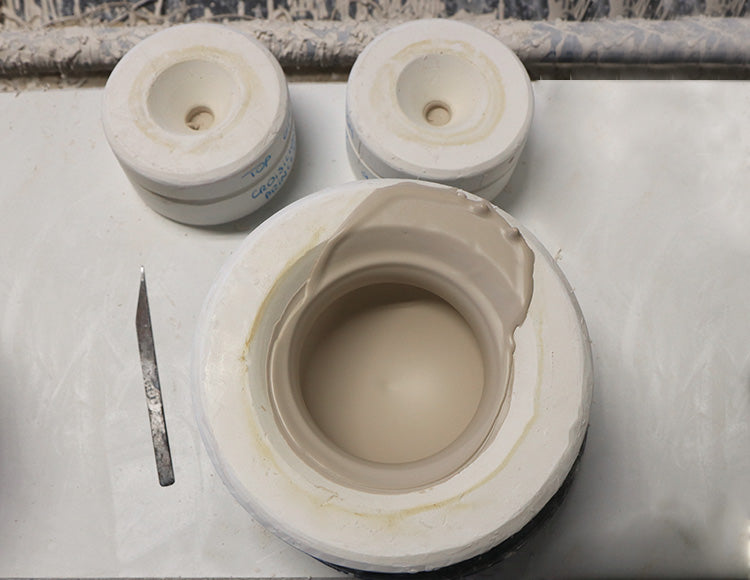
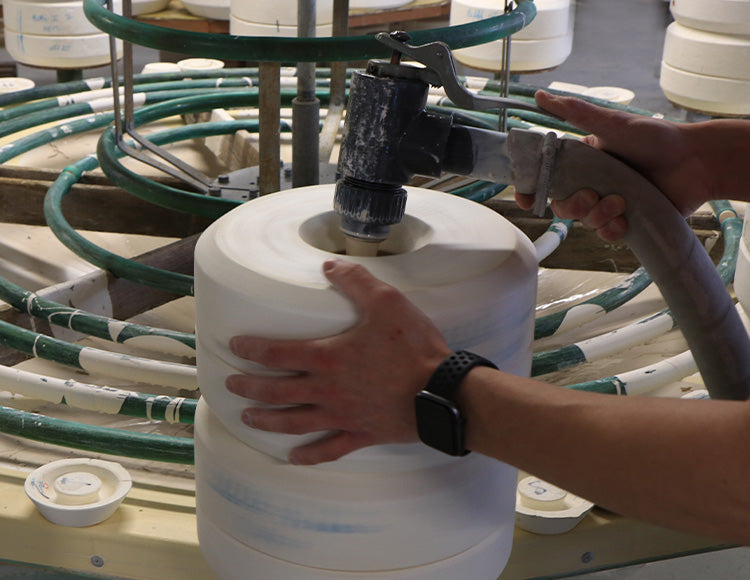
This process uses liquid porcelain slip poured into plaster molds. It is used for hollow pieces (cups, flasks, creamers, vases, etc.). The liquid porcelain adheres to the mold walls. After a setting time, the excess slip is removed, and the pieces can be demolded.

Watch the video
4
Calibration

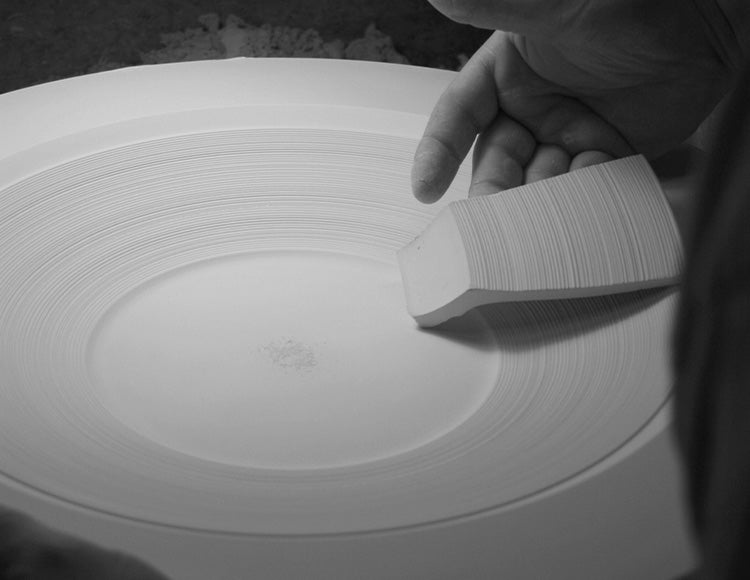
Starting with semi-soft porcelain paste and
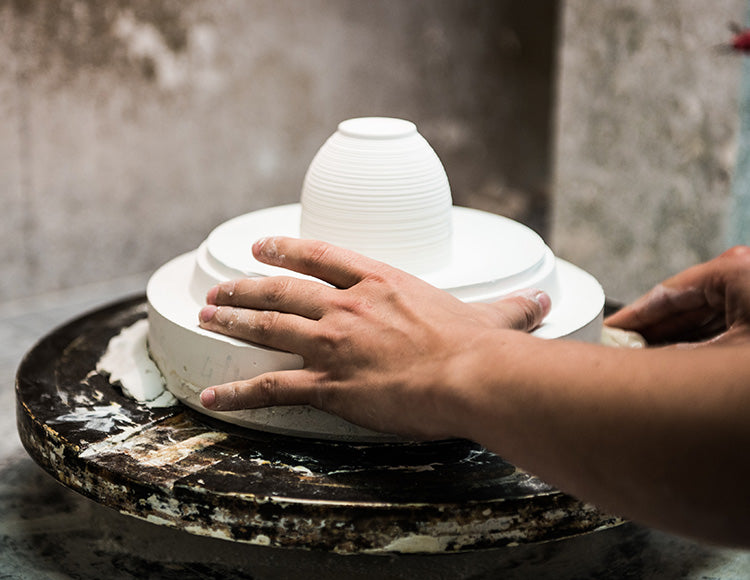
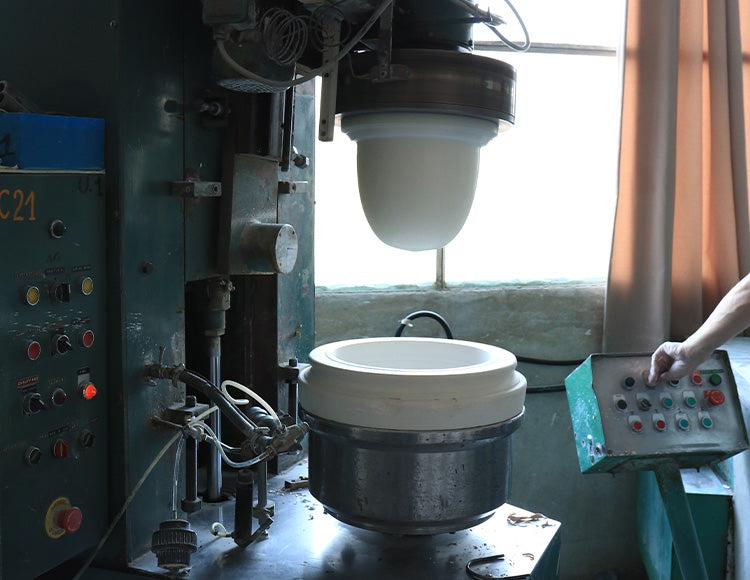
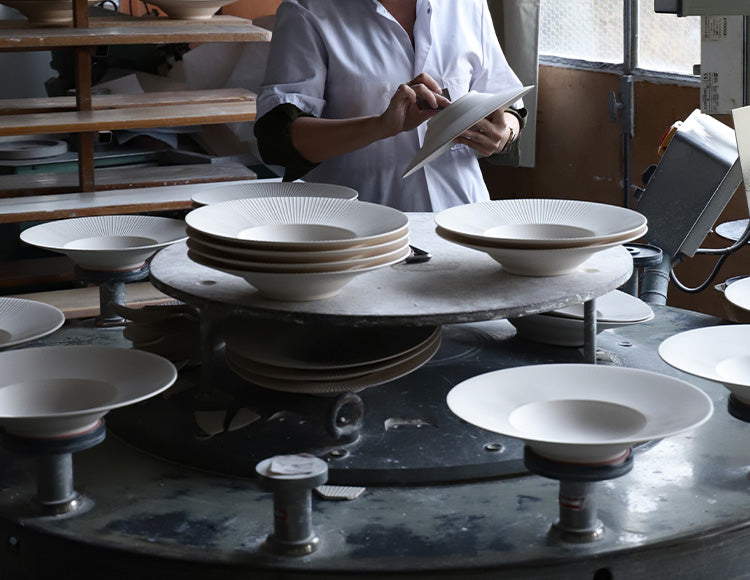
Cut into a disc shape, the sizing process allows for the production of round, hollow pieces such as plates, dishes, salad bowls, or cups. A disc of clay is placed in the plaster mold, which is itself positioned on a lathe. A metal sizing tool is lowered, pressing the clay to distribute it against the mold walls and trimming away the excess.

Watch the video
5
The isostatic press

The paste, in powder form, is compressed under high pressure inside a steel and polyurethane mold. The compacted porcelain powder forms the object.

Watch the video
6
Drying

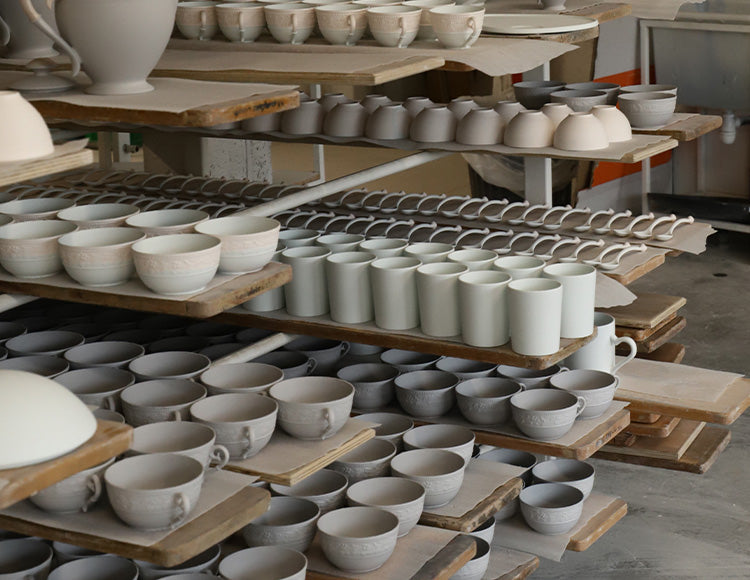
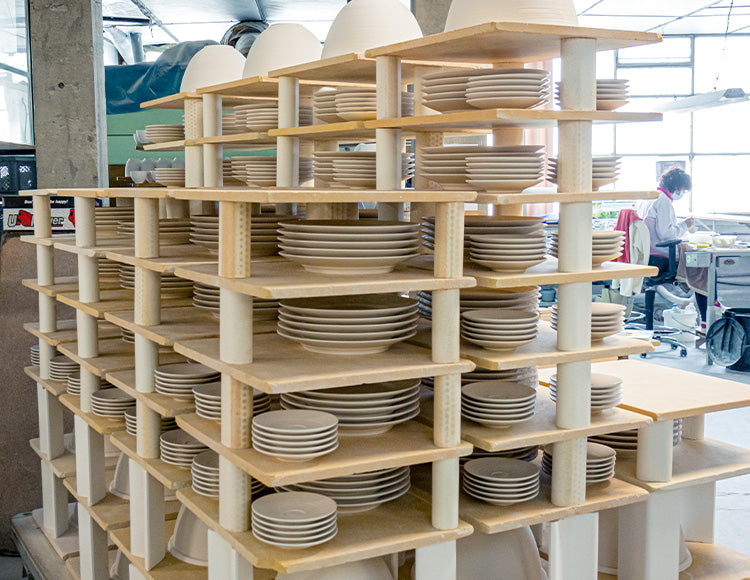
After demolding, the pieces are dried for twelve to twenty-four hours to eliminate any water that may remain in the porcelain.

Watch the video
7
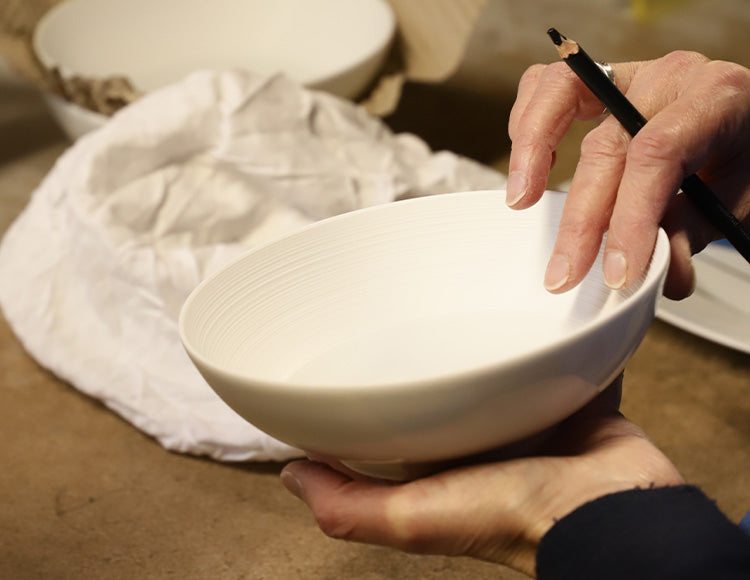
The Finish

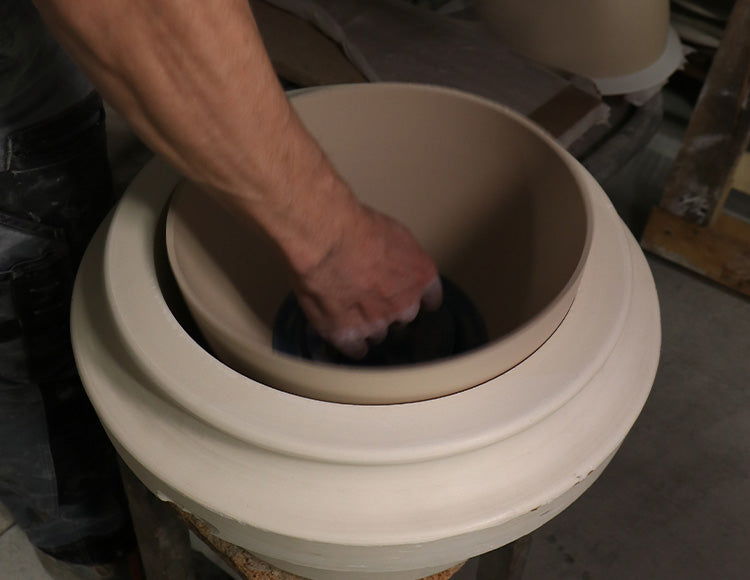
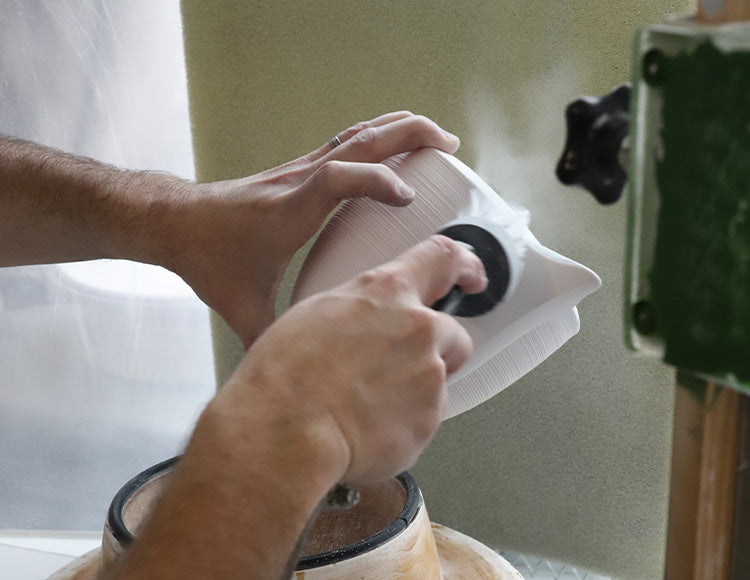
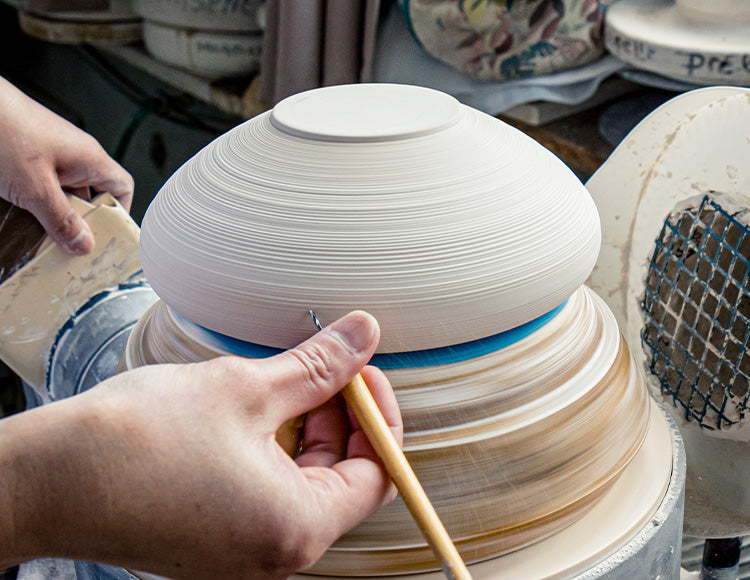
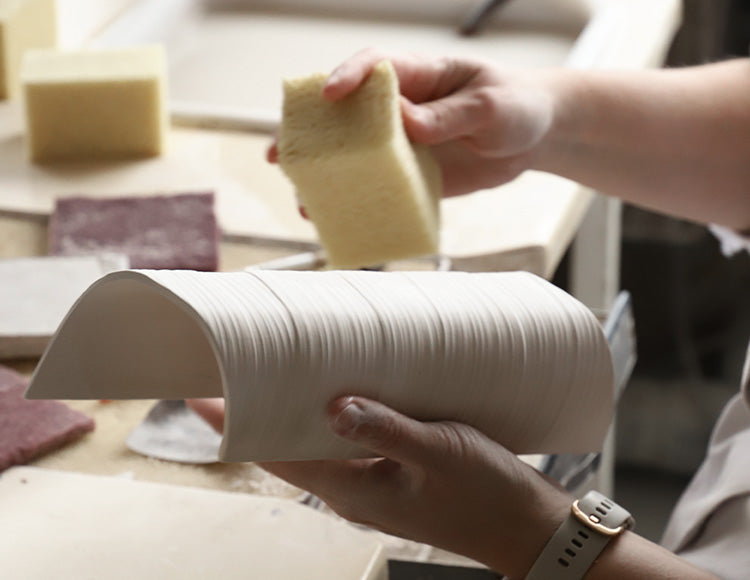
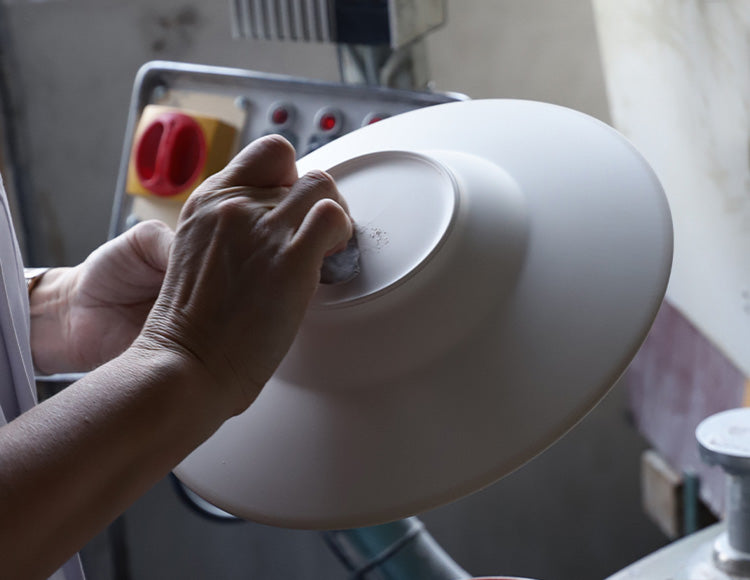
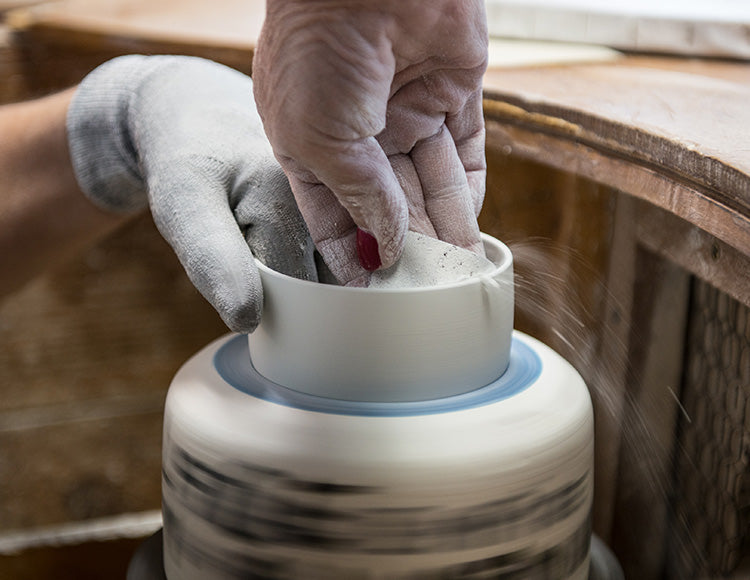
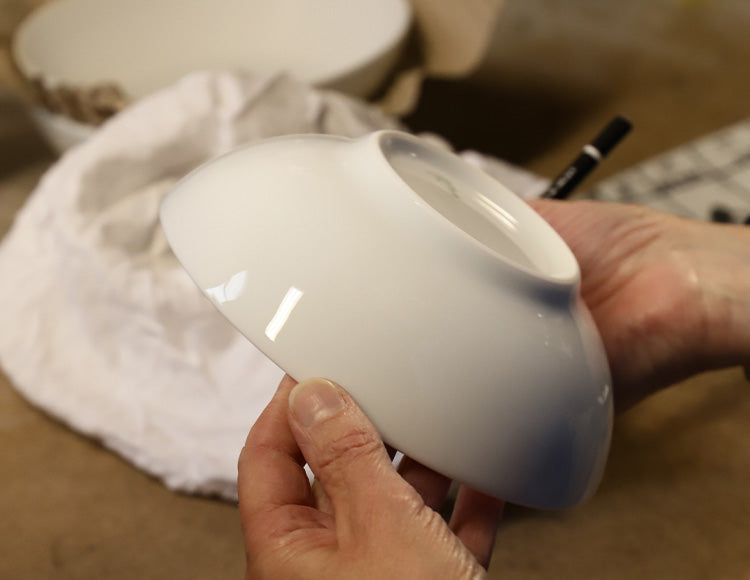
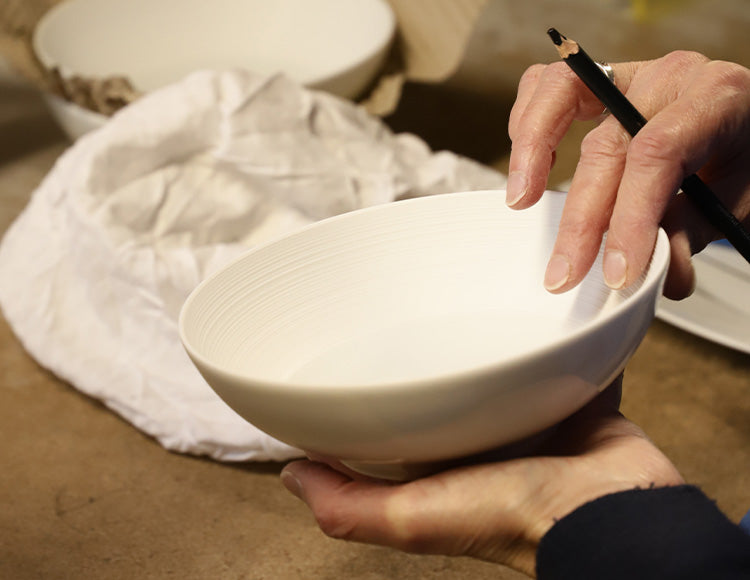
A crucial step in the manufacturing process, finishing removes any imperfections and eliminates seams caused by dividing the mold into several parts. Craftsmen use files and sponges to remove dust.

Watch the video
8
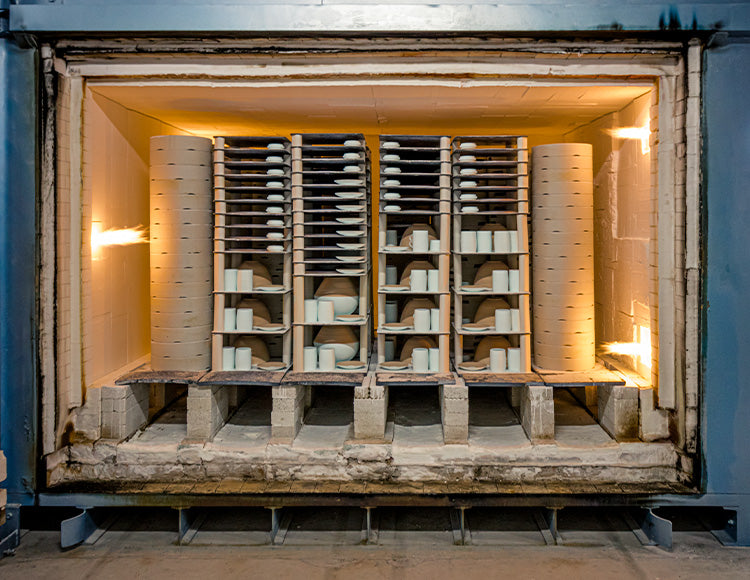
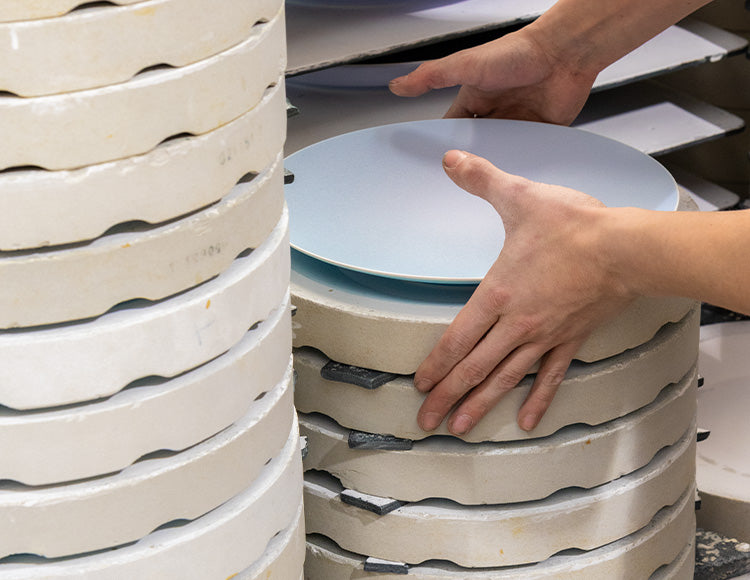
First cooking

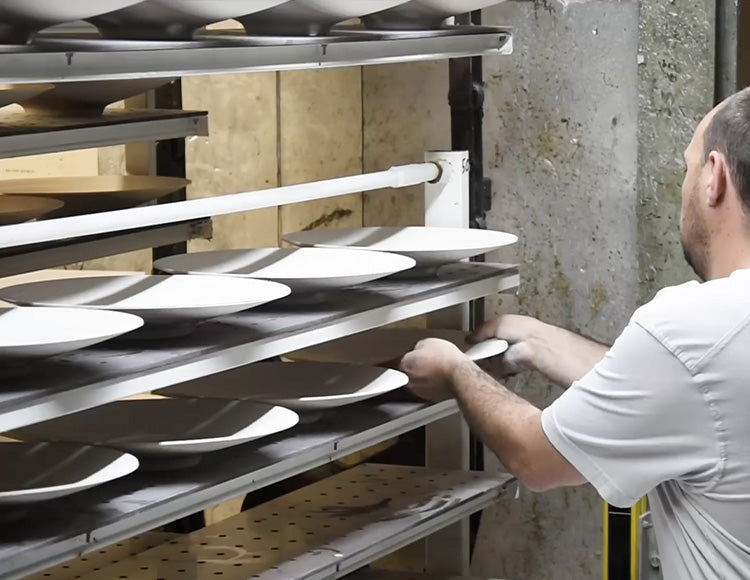
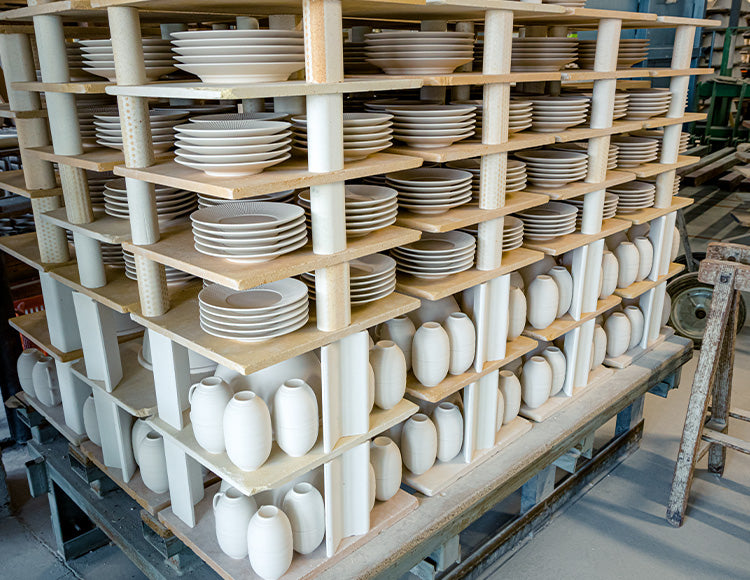
The pieces are fired for the first time in gas kilns at a temperature of 980°C for 24 hours. This firing, known as bisque firing, hardens the pieces, dehydrates them by removing excess water, and makes them porous so that the glaze can then adhere to the surface.

9
Enameling

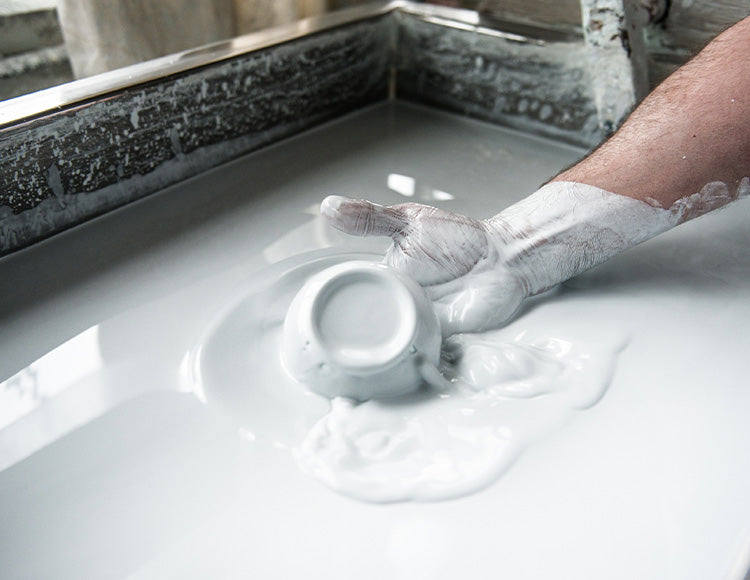
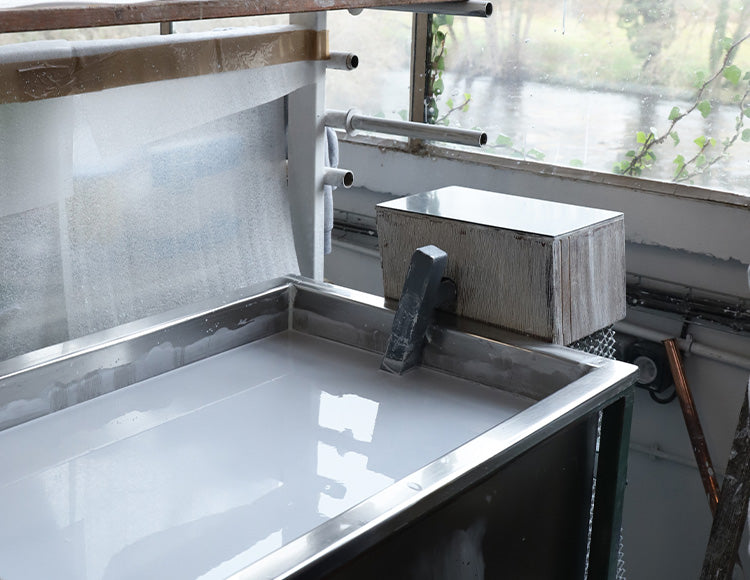
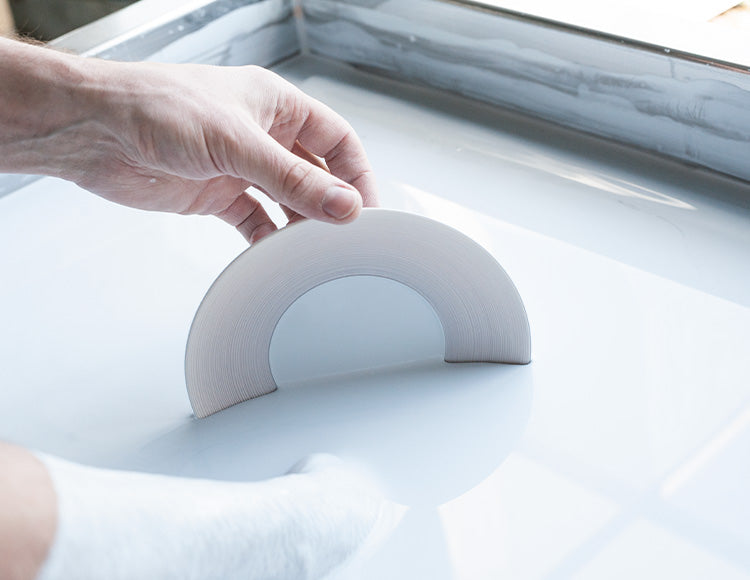
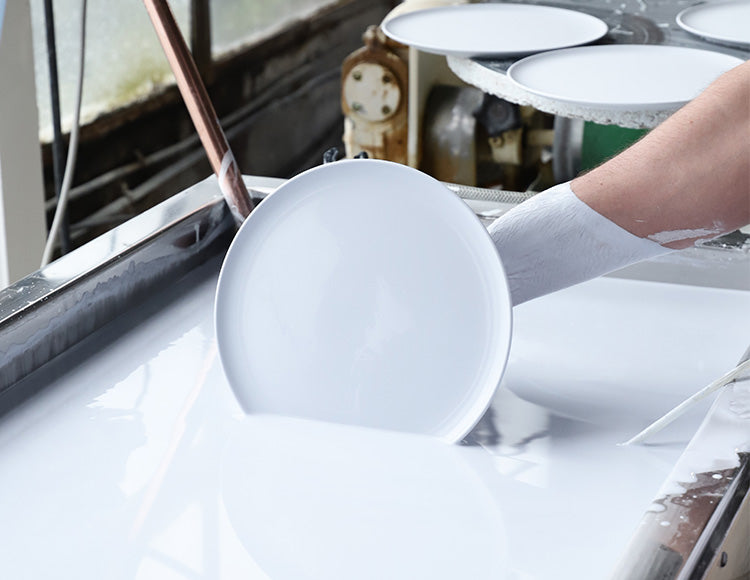
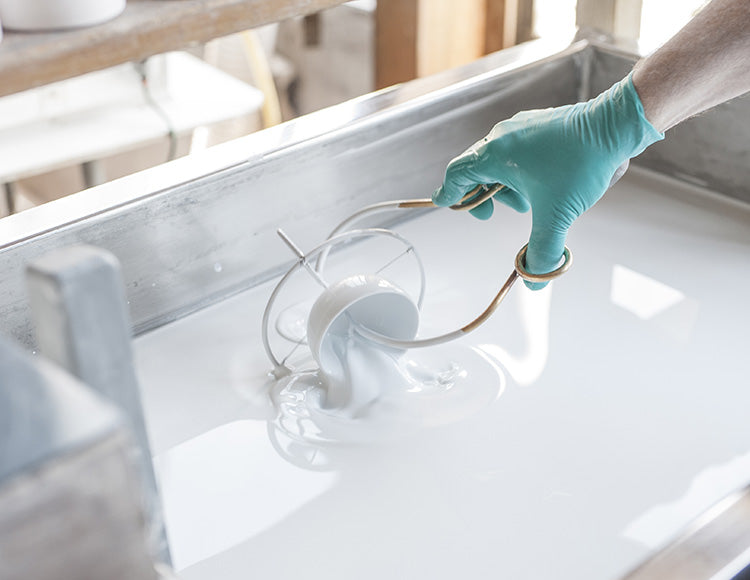
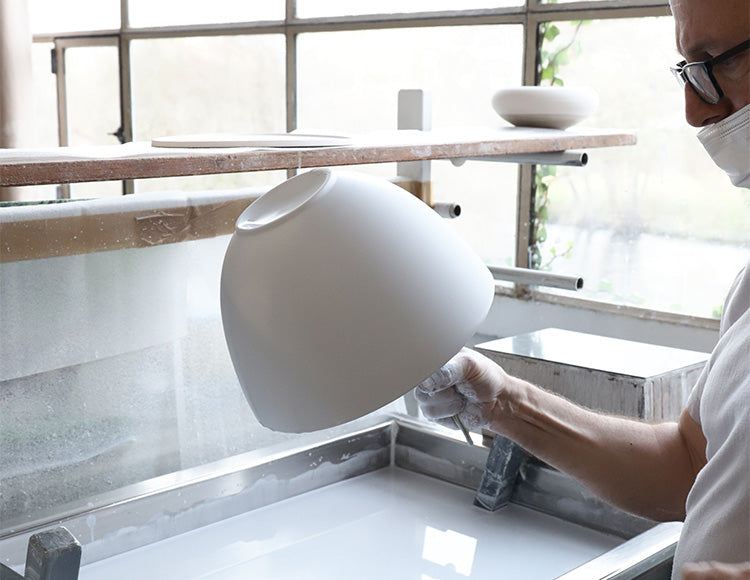
Each piece is hand-dipped in an enamel bath to achieve a smooth, glossy finish.

Watch the video
10
The second cooking

The pieces then undergo a second firing, known as a high-fire firing, at 1400°C for twenty-four hours. The purpose of this firing is to vitrify the clay and glaze, thus developing the whiteness, translucency, and strength of the porcelain. It is during this firing that the piece shrinks significantly (10% to 12%) compared to the model and reaches its final size.

Watch the video
11
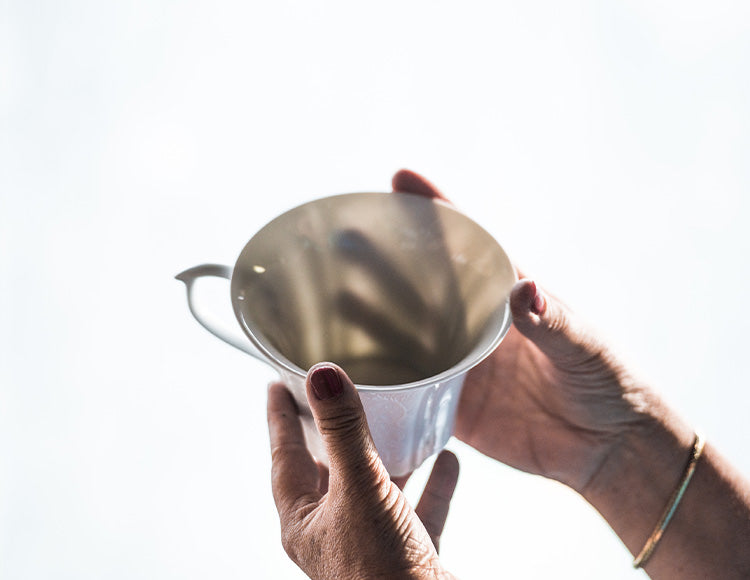
The sorting

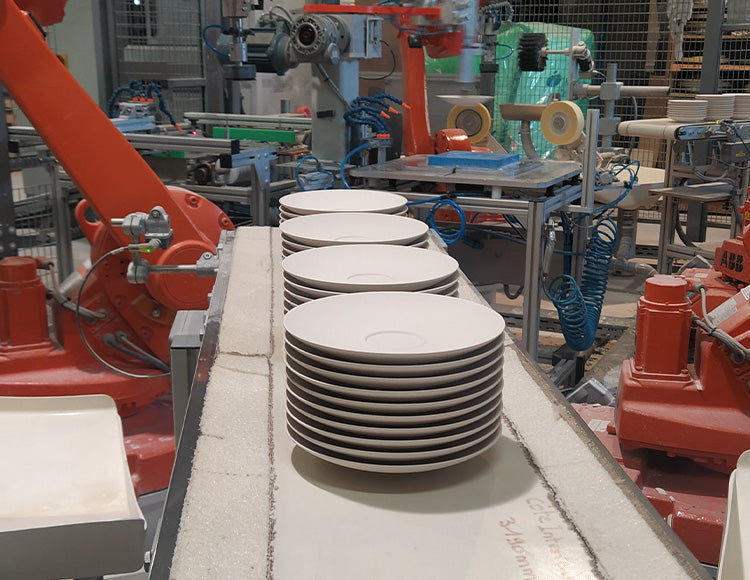
This is the final stage in the production of the white. All pieces of production are checked one by one and chosen according to their level of quality before being distributed to our various points of sale.

12
The decoration

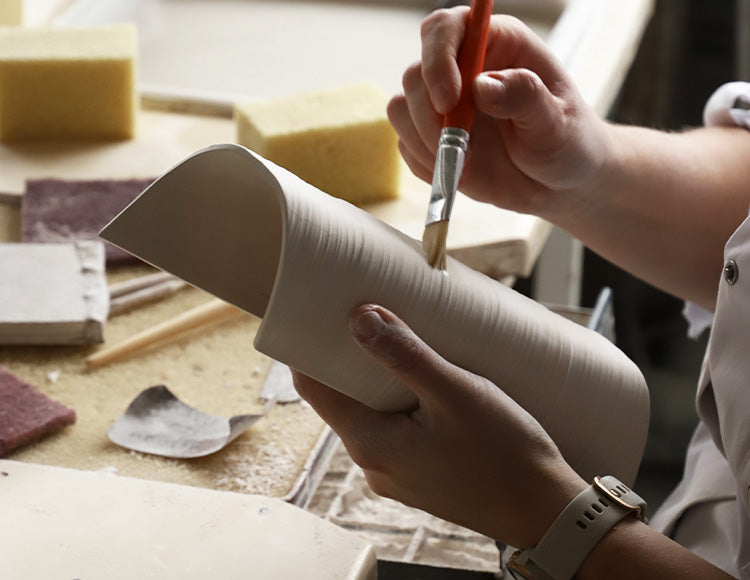
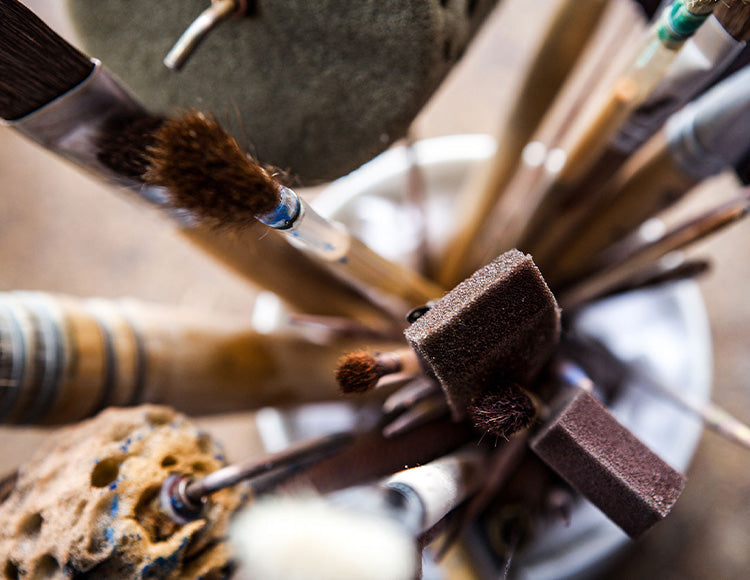
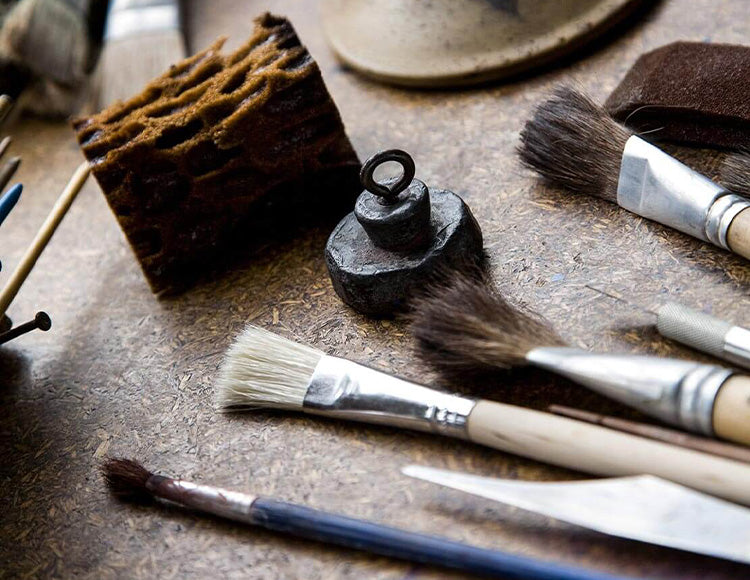
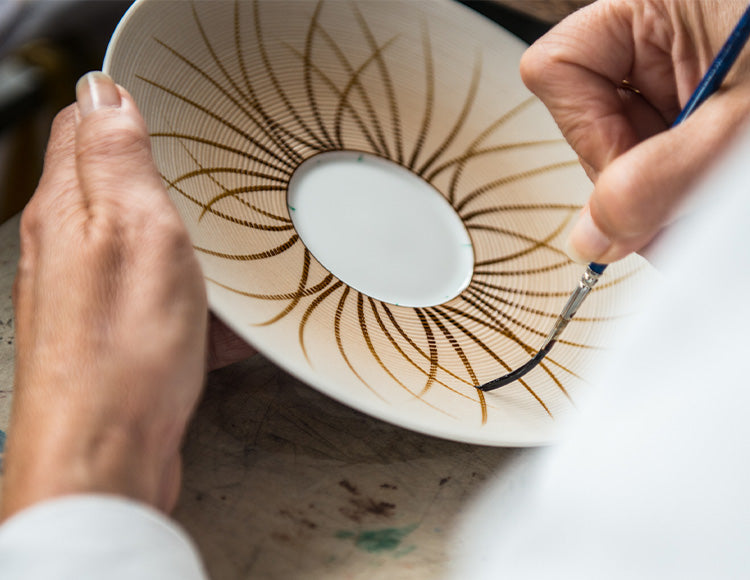
Depending on the style of the collection, the decoration process varies in complexity. Some valuable pieces are hand-painted, and the artisans demonstrate exceptional skill using
a wide variety of brushes.

Watch the video
13
Quality control

Before being sent to its final destination, each item is carefully checked after each operation, in order to offer a very high quality product.

Watch the video